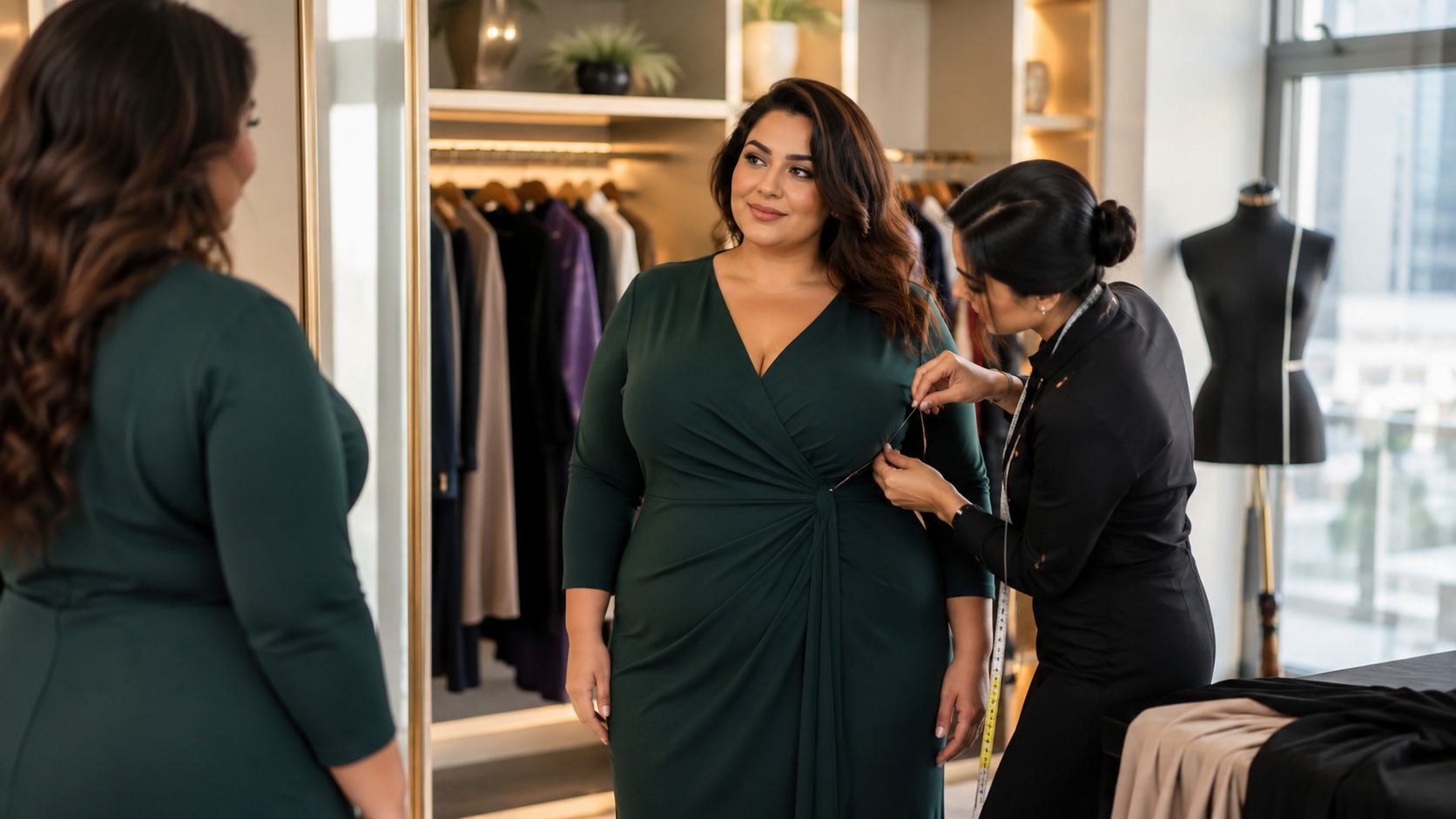
There is a problem that millions of people in Dubai deal with quietly, every time they go shopping.
You find something you like. The colour works. The style is right. But the fit? The shoulders are too wide. The waist sits awkwardly. The length is wrong. You try a size up and now it fits in one place but not another. You try a size down and cannot close it at all.
This is not a personal failing. It is a structural problem with how the fashion industry produces clothing.
The global plus-size clothing market was valued at $194 billion – and it continues to grow – yet the majority of garments are still designed around a narrow set of standardised measurements that do not reflect the actual diversity of bodies wearing them. In Dubai, where the population spans over 200 nationalities each with different average proportions, this problem is amplified further.
The solution is not to keep searching for the perfect ready-to-wear item. The solution is alteration – modifying clothing that is close to fitting into clothing that fits precisely.
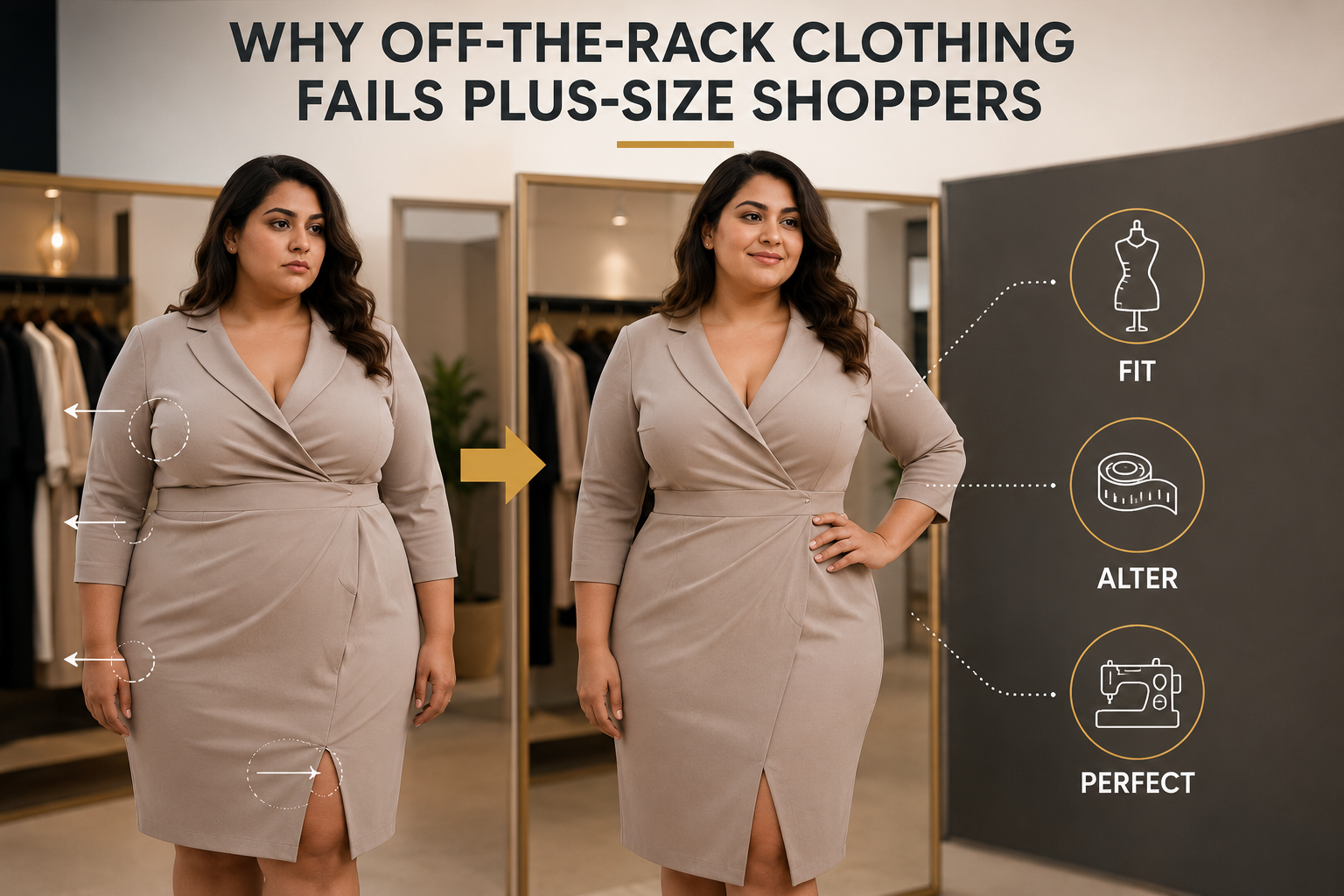
Why Off-the-Rack Clothing Fails Plus-Size Shoppers
Standard sizing in fashion is built around a single set of proportions and then scaled up or down mathematically. The problem is that bodies do not scale mathematically. A person who wears a larger size in the waist does not necessarily have proportionally longer arms, wider shoulders, or a longer torso to match.
This is why the same person can try on ten different garments in the same stated size and have ten completely different fit experiences. The sizing label is almost meaningless as a predictor of fit.
Finding the right look is one thing – but finding one that actually fits your body is a whole other matter entirely. This is true for everyone, but it is felt most acutely by people shopping in larger sizes, where the range of options is narrower and the inconsistency between brands is greater.
Alteration closes this gap. Instead of the garment dictating how you look, you dictate how the garment fits.
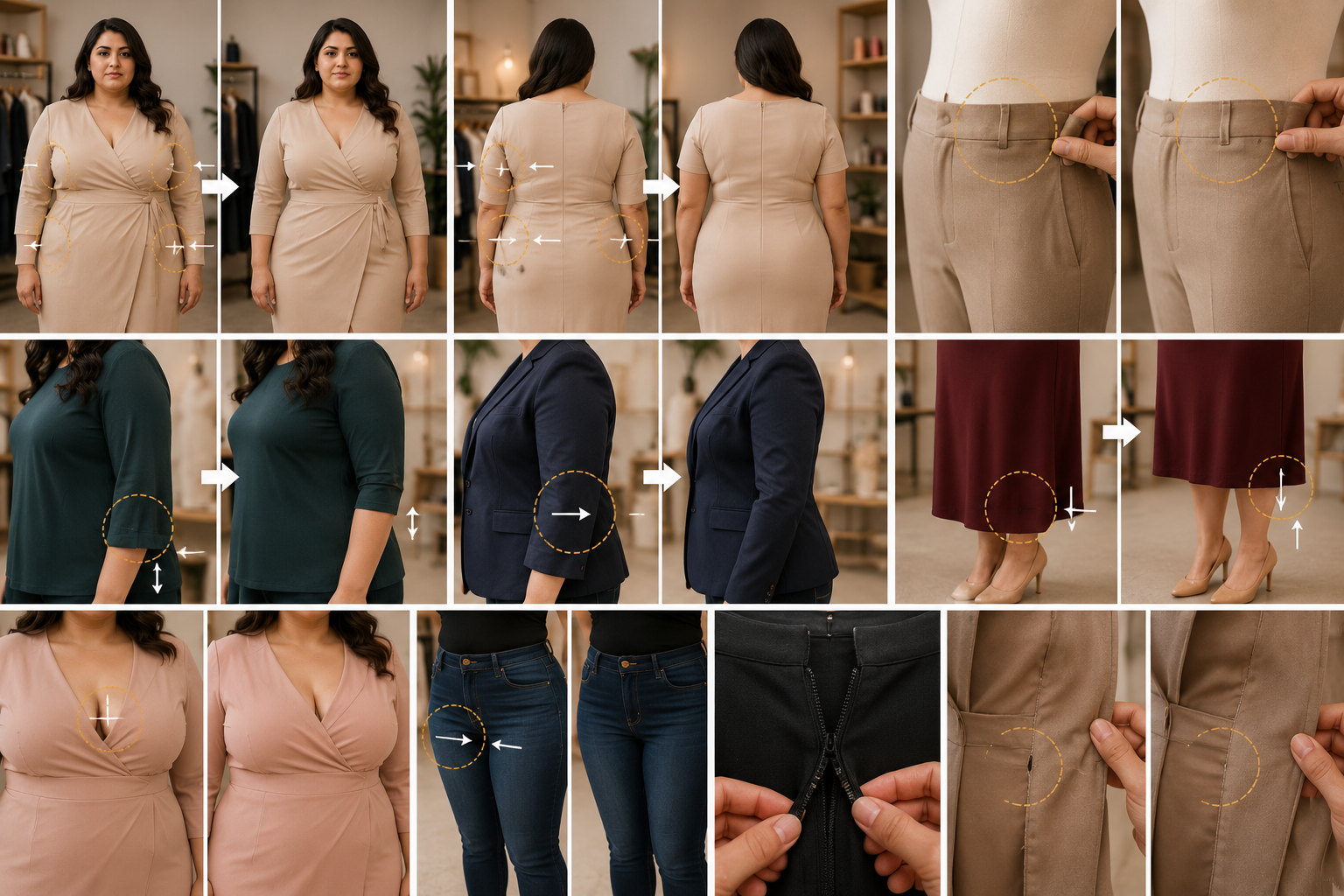
What Can Actually Be Altered for Plus-Size Garments?
The short answer is: most things. The longer answer requires understanding what types of adjustments are possible and which direction they work in.
| Fit Issue | Alteration Type | Direction | Notes |
|---|---|---|---|
| Garment too wide overall | Side seam take-in | Smaller | Most common adjustment |
| Waistband too loose | Waist adjustment | Smaller or larger | Works on trousers, skirts |
| Sleeves too long | Sleeve shortening | Shorter | Standard adjustment |
| Sleeves too wide | Sleeve tapering | Narrower | Preserves overall shape |
| Hem too long | Hem shortening | Shorter | Works on all garment types |
| Garment too tight | Let out seams | Larger | Requires existing seam allowance |
| Shoulder too wide | Shoulder restructure | Narrower | More complex, very achievable |
| Dress gaping at bust | Bust adjustment | Fitted | Side or back seam work |
| Trousers too loose at thigh | Leg tapering | Narrower | Clean, modern result |
| Zip broken or straining | Zip replacement | – | Common fix on fitted garments |
What Makes Plus-Size Alteration Different?
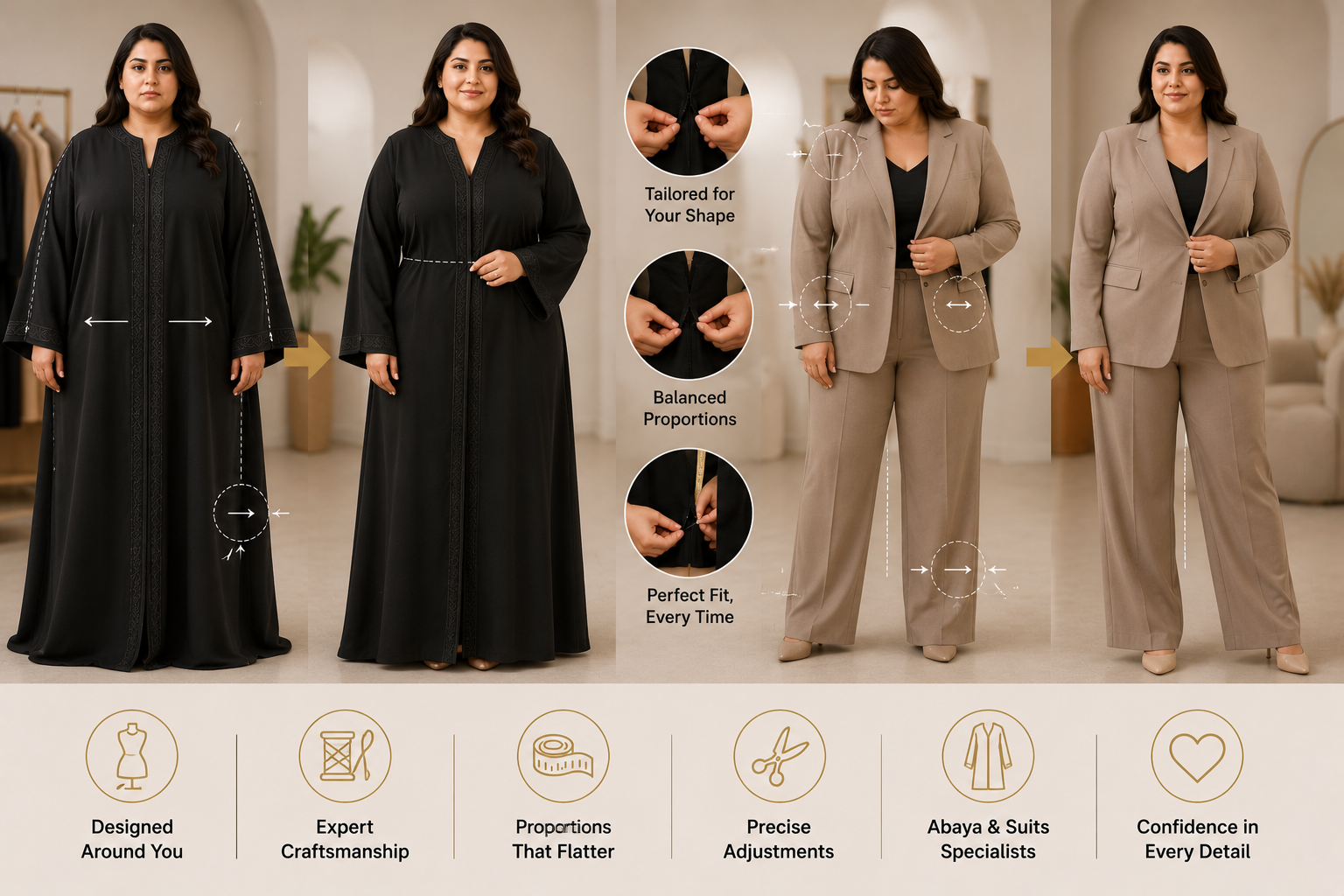
In principle, the techniques are the same as for any alteration. In practice, a tailor working with larger garments needs to understand how adjustments in one area affect the overall balance and drape of a garment.
For example, taking in the side seams of a dress affects how the garment sits across the hips, chest, and shoulders simultaneously. A tailor who only looks at the waist without considering the full picture can create a garment that fits in one place and pulls awkwardly in another.
Skilled tailors working with plus-size clients focus on size modification, individual alteration, and restyling – ensuring the clothes look natural, not simply tweaked. The goal is always a garment that looks like it was made for you, not one that has been visibly altered to accommodate you.
This is the difference between an experienced alteration specialist and a generalist tailor who occasionally handles larger garments.
Fabric Matters Too
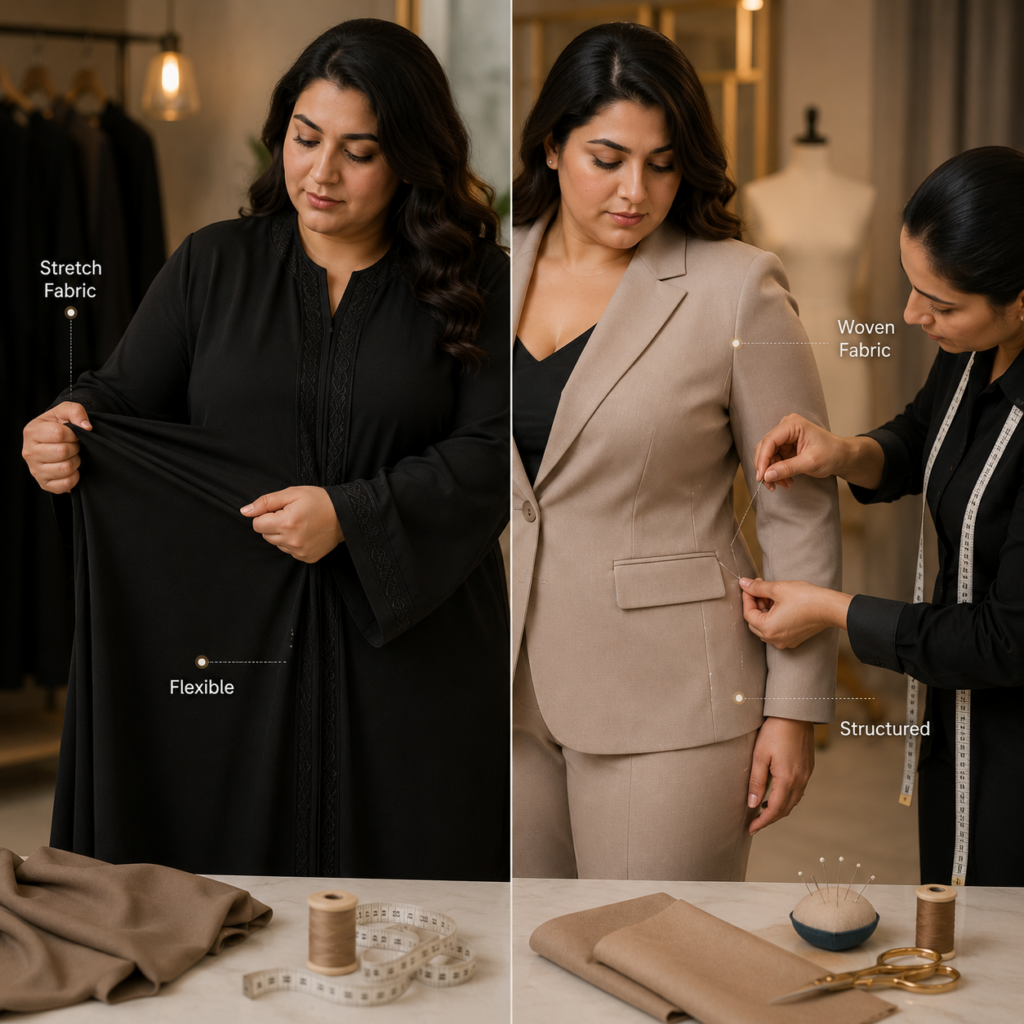
Plus-size garments are often made from stretch fabrics – jersey, ponte, elastane blends – that behave differently under the needle compared to woven fabrics like cotton or linen. Not every tailor is equally experienced with stretch fabrics.
When bringing a stretch garment for alteration, always mention the fabric type so the tailor can use the correct needle and technique. A straight stitch on stretch fabric will break under normal wear – the alteration must use a stitch that moves with the fabric.
Woven fabrics – denim, cotton, linen, crepe – are more forgiving and easier to alter precisely, which is why denim jeans and tailored trousers are among the most commonly and successfully altered plus-size garments.
A Practical Approach to Shopping and Altering
The most effective strategy for plus-size shopping – whether in Dubai’s malls or online – is to stop trying to find the perfect fit off the rack and instead buy for your most difficult measurement, then alter the rest.
For jackets and blazers: buy for the shoulders. Shoulders are the hardest and most expensive alteration. Everything else – sleeves, body width, length – is straightforward to adjust.
For trousers and jeans: buy for the hips or thighs, whichever is larger. Waist and length adjustments are among the easiest and most affordable alterations available.
For dresses: buy for the widest point – hips or bust – and alter the length, waist, and any other measurements from there.
This approach means you spend less time searching for the impossible perfect fit and more time wearing clothes that actually look good on you.
Where to Get Plus-Size Clothes Altered in Dubai
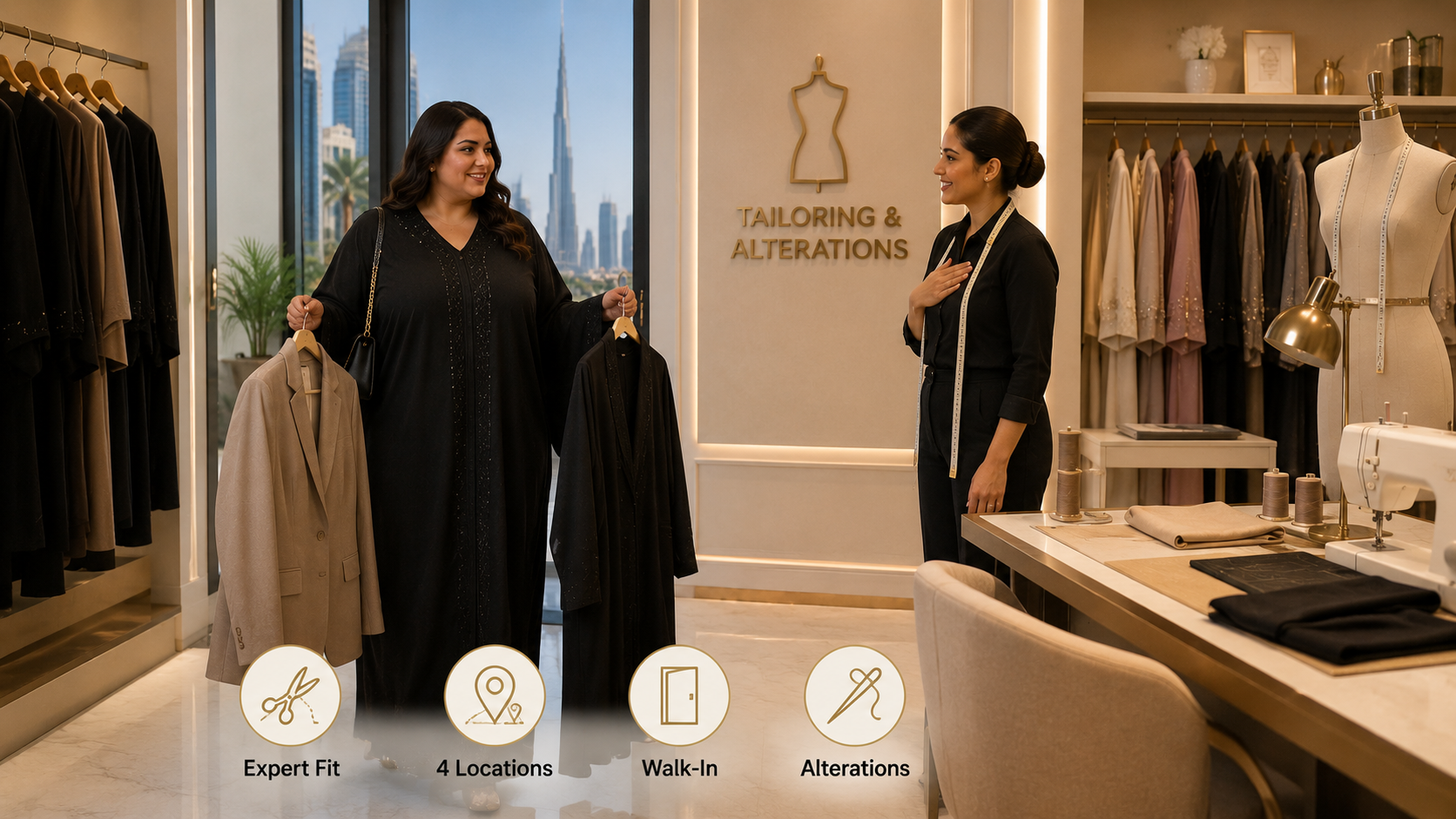
Dr. Alter is known for handling alterations that other tailors turn away – skilled at size modification, individual alteration, and restyling, especially for clients who want clothes to look natural, not simply adjusted.
With four locations across Dubai, the service is accessible from most parts of the city:
- Business Bay – Bay Avenue Mall
- The Greens – Onyx Tower 2
- Festival City – Near North Parking 2
- Damac Hills – Damac Hills 1 Mall
Walk-ins are welcome at all four locations. For anyone whose workplace is nearby, Dr. Alter’s Corporate Solutions service brings the alteration service directly to your office – no travel needed.
For the full range of services available, visit the Women’s Alteration Services or Men’s Alteration Services pages, or explore Everyday Alteration Services for casual and daily wear.
A Word on What ISO Certification Is Not
We want to be straightforward about something. ISO 9001:2015 is a quality management system certification. It certifies that our processes are structured, documented and consistently followed. It does not certify the artistic skill of our tailors – though we are very proud of that too.
What it does certify is that the system around those tailors is sound. That measurements are taken the same way every time. That finished garments go through the same quality checks. That customer feedback is captured and acted upon. That problems are identified and corrected systematically rather than ignored.
The skill of our tailors combined with the rigour of our certified system is what makes Dr. Alter different from every other alteration service in Dubai.
Your clothes should work for you - not the other way around.
Visit Dr. Alter at any of our four Dubai locations. Walk-ins welcome, no appointment needed.
Frequently Asked Questions (FAQs)
Can plus-size clothes always be altered?
Most plus-size garments can be altered. The main constraint for making something larger is whether the original construction has sufficient seam allowance. Making garments smaller – the more common request – is almost always achievable.
Is it harder to alter plus-size clothing than standard sizes?
The techniques are the same, but an experienced tailor understands how adjustments in one area affect the overall drape and balance of a larger garment. This is why the tailor’s experience with different body types matters.
What is the most common plus-size alteration in Dubai?
Waist adjustment on trousers and skirts, and side seam take-in on dresses and tops, are the most frequently requested alterations across all body sizes – including plus sizes.
Can stretch or jersey fabric be altered professionally?
Yes – but it requires the correct needle and stitch technique to ensure the seam moves with the fabric. Always inform the tailor of the fabric type before work begins.
Can customers verify Dr. Alter's ISO certification?
Yes. Dr. Alter’s ISO 9001:2015 certification can be independently verified through the certifying authority and international certification databases using the official certificate number.
Can I have multiple fit issues corrected in one visit?
Yes. A tailor will assess all fit issues together and work through them as part of a single alteration. You do not need to visit multiple times for multiple adjustments on one garment.
What should I bring when dropping off clothes for plus-size alteration?
Bring the garment and the shoes you plan to wear with it – particularly important for hem length. For fitted garments, wearing similar undergarments to those you would normally use also helps achieve the most accurate fit.
Can clothes that are too tight be made larger?
This depends on the seam allowance in the original garment. A tailor will check this on inspection. Some garments have enough fabric in the seams to allow letting out; others do not.
Is alteration worth it for plus-size fast fashion?
If you genuinely like the piece and the fabric quality is reasonable, yes. Even a basic alteration on an inexpensive garment can significantly extend how often and how confidently you wear it.
Professional Alterations, Brought to Your Office
Our specialty at Dr. Alter is providing excellent alteration services that are customized to meet your specific requirements.