
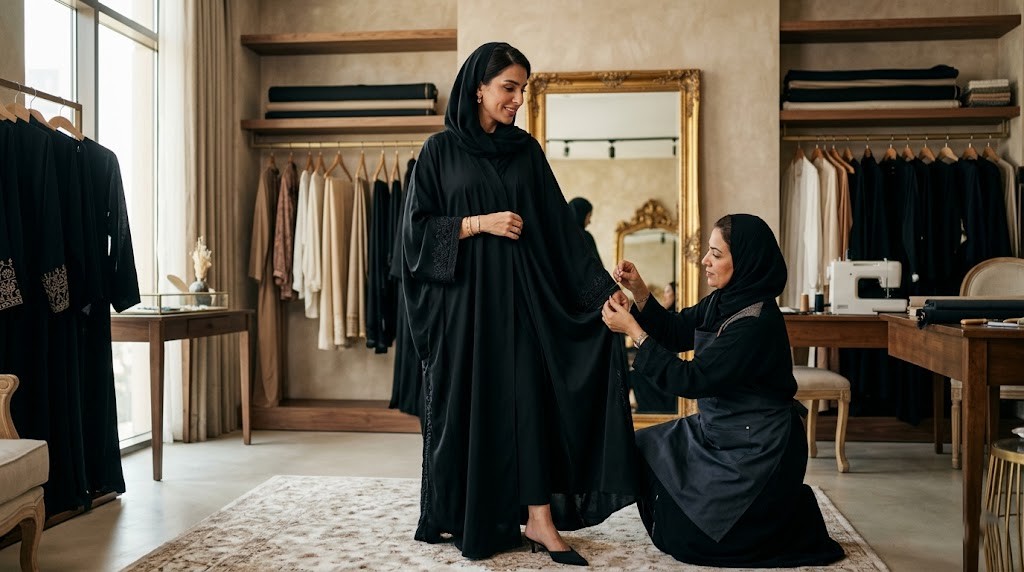
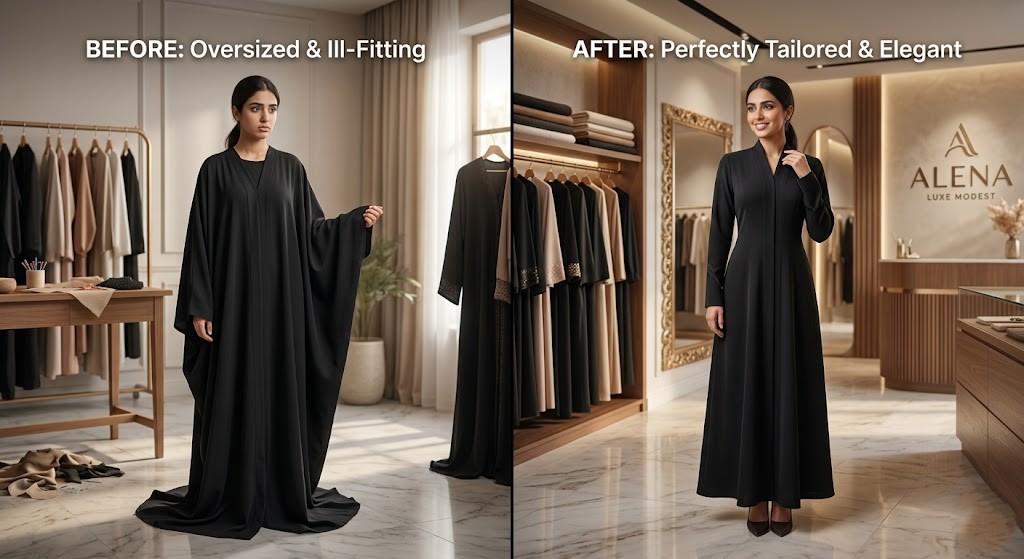
You found an abaya you love. The fabric is beautiful, the design is exactly right, the colour works perfectly. But when you put it on, the length drags on the floor. The sleeves are too wide. The fit across the shoulders sits awkwardly.
This is one of the most common experiences for women in Dubai – and it happens regardless of whether the abaya was inexpensive or cost several hundred dirhams.
The reason is simple: abayas are produced in standard sizes that do not account for the full range of heights, body shapes, and proportions across Dubai’s diverse female population. Size inconsistencies across brands and limited standardised sizing mean that even well-made abayas frequently require adjustment after purchase.
The solution is professional alteration. And most abaya fit problems – even ones that look complicated – are more straightforward to fix than you might think.
Why Abaya Fit Matters More Than People Realise
An abaya that does not fit correctly does not just look off. It affects how comfortable you feel wearing it, how confidently you carry yourself, and how the garment holds up over time.
In professional environments, abayas with structured tailoring, clean lines, and high-quality fabrics convey professionalism while remaining elegant. But that polished effect depends entirely on fit. A hem that drags, sleeves that bunch, or a shoulder line that sits wrong undermines the entire garment – regardless of its quality or price.
UAE women today want abayas that are comfortable, elegant, high-quality, and perfect for the UAE’s climate. Alteration is what bridges the gap between the abaya you bought and the abaya you actually want to wear every day.
What Abaya Alterations Are Possible?
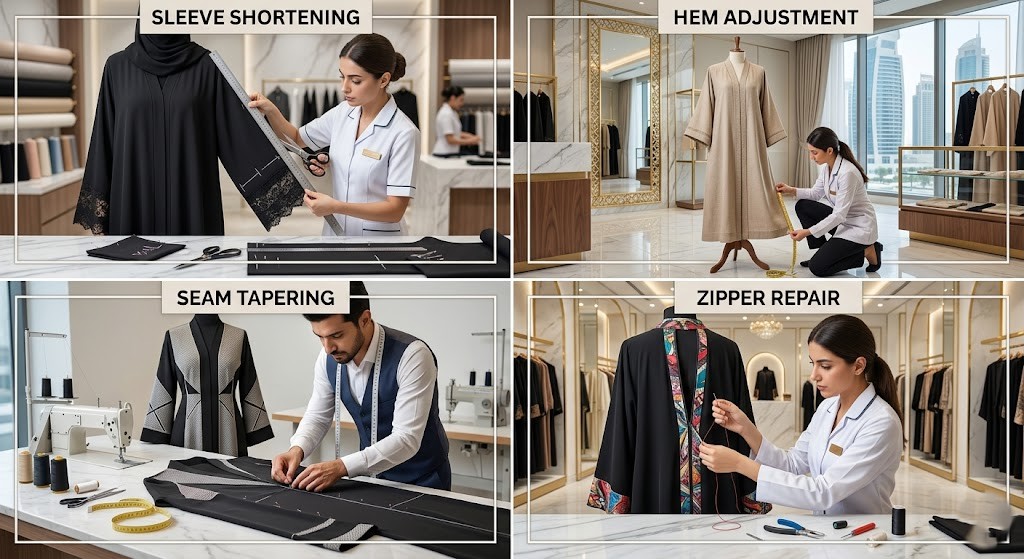
The good news is that most common fit issues are well within the capability of an experienced alteration tailor. Here is a clear breakdown:
| Fit Problem | Alteration Required | Complexity |
|---|---|---|
| Abaya too long – hem dragging | Length shortening (hem adjustment) | Low |
| Sleeves too long | Sleeve shortening, cuff preserved | Low |
| Sleeves too wide | Sleeve tapering at the seam | Low-Medium |
| Overall fit too loose | Side seam adjustment | Low-Medium |
| Shoulder line sitting wrong | Shoulder adjustment | Medium |
| Neckline too wide or loose | Neckline alteration | Medium |
| Embellished hem needs shortening | Careful hem work around embroidery | Medium-High |
| Zip or closure repair | Zip replacement or button fix | Low |
| Full length + width adjustment | Multi-point alteration | Medium |
The majority of everyday abaya alterations – length, sleeves, side seams – are straightforward procedures for a skilled tailor who works with traditional garments regularly.
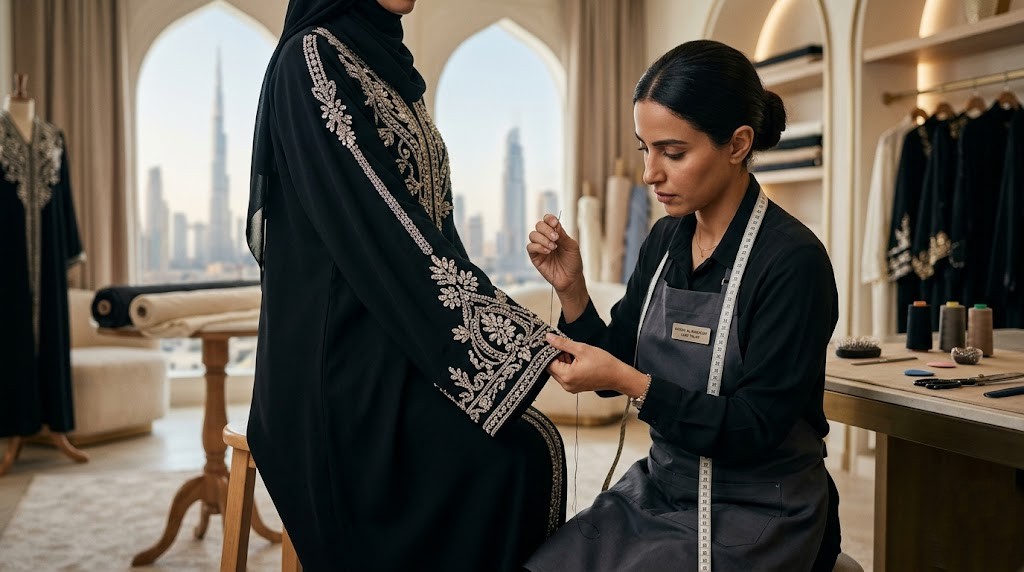
What About Embellished or Decorated Abayas?
This is where many women hesitate. If an abaya has embroidery, beading, lace trim, or crystal detail, does that mean it cannot be altered?
Not necessarily. Embellished abayas can be altered – but they require a tailor who understands how to work around the decorative elements without disturbing them. The key is communication. Before any work begins, always show the tailor exactly where the embellishments sit and discuss how the alteration will be handled.
For embellished hems specifically, a tailor will often shorten from above the embellishment line rather than cutting through the decorated edge – preserving the original finish of the garment entirely.
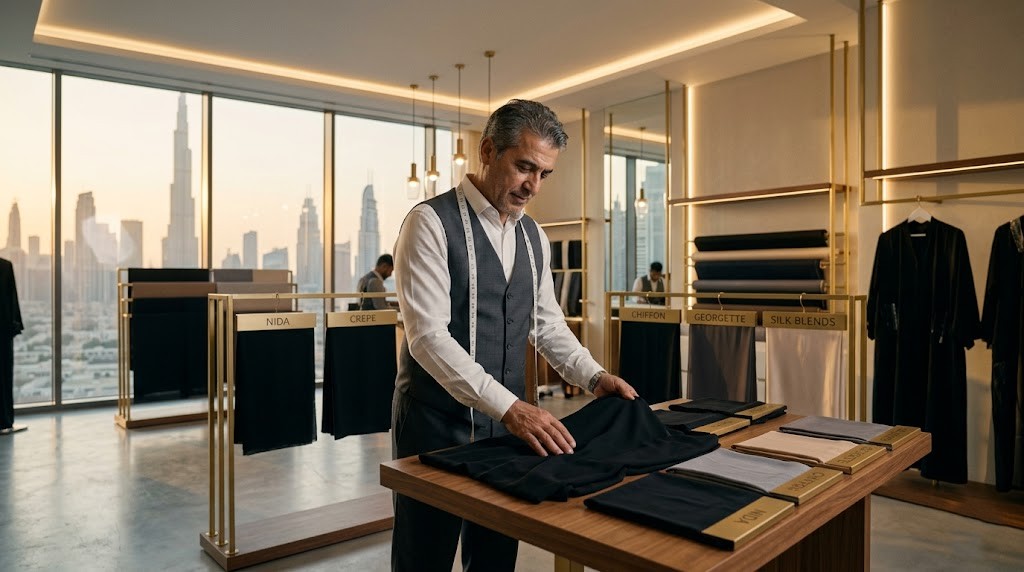
Does the Fabric Type Affect What Can Be Done?
Yes – fabric matters in abaya alteration, though it rarely prevents alterations from being possible. Different fabrics require different handling:
- Nida and crepe - the most common abaya fabrics - are straightforward to work with and hold alterations cleanly
- Chiffon and georgette more delicate, require careful cutting and finishing to avoid fraying
- Silk blends - need experienced handling but can be altered well with the right technique
- Double-layered fabrics - both layers must be adjusted together, requiring more precision
Chiffon, crepe, and nida fabrics are popular choices for daily wear due to their comfort and ease of movement – and all three are fabrics that experienced alteration tailors in Dubai work with regularly.
Always tell your tailor what fabric the abaya is made from before the work begins, particularly for delicate or luxury materials.
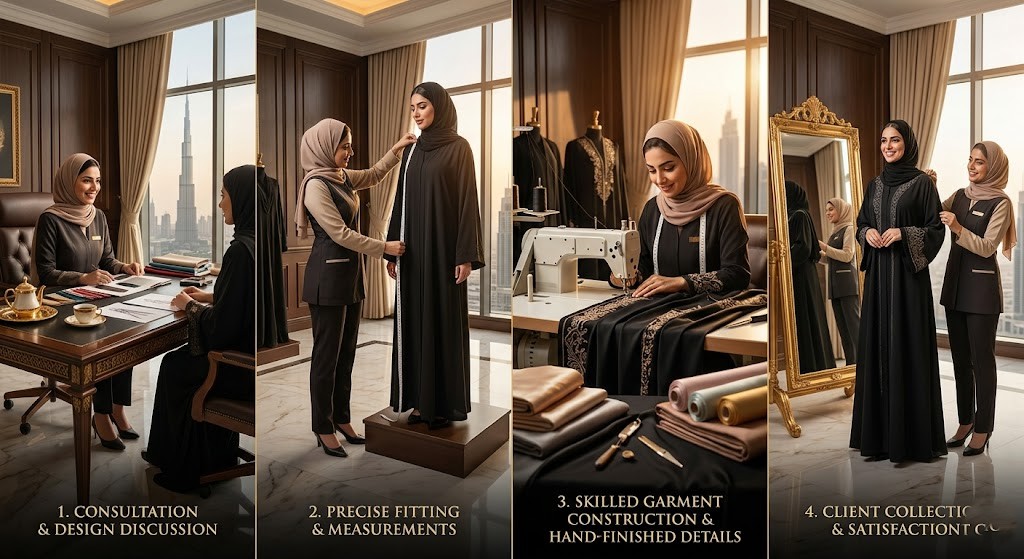
How Does the Abaya Alteration Process Work?
For anyone who has not had a traditional garment altered before, the process at Dr. Alter is straightforward:
- Walk in to your nearest location - no appointment needed
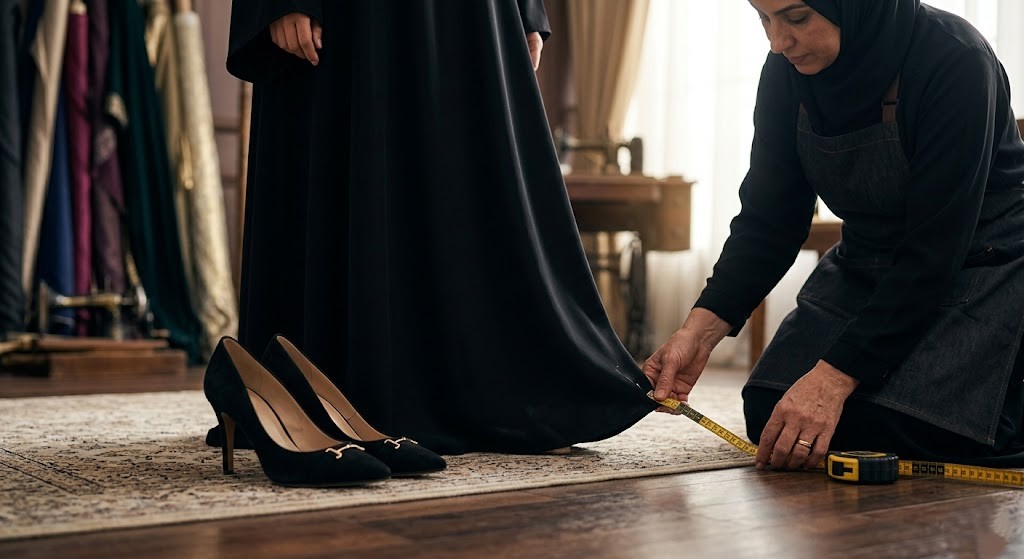
- Bring the abaya and the footwear you intend to wear with it - heel height directly affects the correct hem length
- Consult with the tailor they will assess the garment, discuss what needs adjusting, and confirm what is achievable given the fabric and construction
- Drop it off - your abaya is logged and labelled
- Collect it altered, finished, and ready to wear
One important tip: always wear or bring the footwear you plan to use with the abaya. Whether you wear flats or heels makes a significant difference to where the hem should sit – and getting this wrong means the length will still be off even after alteration.
Common Mistakes to Avoid
A few things people often get wrong when having an abaya altered:
- Not bringing the right shoes - the most frequently made mistake; always bring your intended footwear
- Asking for too drastic a shortening at once - if you are unsure, go shorter in stages rather than cutting too much at once
- Not communicating about embellishments - always point these out before the tailor begins
- Leaving it too late before an event - for complex or multi-point alterations, allow adequate time ahead of Eid, weddings, or formal occasions
Why Alteration Is Better Than Replacement
Dr. Alter has four locations across Dubai, all of which handle abaya alterations as a regular part of the service offered:
- Business Bay - Bay Avenue Mall
- The Greens - Onyx Tower 2
- Festival City - Near North Parking 2
- Damac Hills - Damac Hills 1 Mall
All locations welcome walk-ins, work across all standard abaya fabrics, and handle both everyday and formal traditional garments. For women who prefer a female tailor for the consultation and fitting, call ahead on +971 50 861 6508 to confirm availability.
For more on women’s alteration services, visit the Women’s Alteration Services page. If you have a workplace near any of our locations, Dr. Alter also offers a Corporate Solutions service that brings alteration directly to your office.
Your abaya should fit you - not the other way around.
Visit Dr. Alter at any of our four Dubai locations. Walk-ins welcome, no appointment needed.
Frequently Asked Questions (FAQs)
Can any abaya be altered, regardless of design?
Most abayas can be altered. The main limiting factor is the seam allowance available in the original garment and the complexity of any embellishments. A tailor will assess this at the point of drop-off and advise on what is possible.
Will alteration affect the original look of the abaya?
When done correctly, a good alteration is invisible. The goal is always to preserve the original design and finish while correcting the fit.
Can an abaya be made shorter without disturbing the embroidered hem?
Yes. A skilled tailor can shorten from above the embellishment line, preserving the decorated hem completely. This is a common request and well within standard practice.
What is the most common abaya alteration in Dubai?
Length shortening – hemming the abaya to the correct floor-grazing or ankle-length – is the single most frequent abaya alteration request.
Can an abaya be taken in if it is too loose overall?
Yes. Side seam adjustment can reduce the overall width of the abaya, creating a more fitted silhouette without altering the front design or closure.
How should I prepare my abaya before bringing it in?
Bring it clean, and wear or carry the shoes you plan to wear with it. This allows the tailor to set the hem length precisely. For embellished garments, let the tailor know about any delicate detailing upfront.
Can kaftans and other traditional garments be altered in the same way?
Yes. Dr. Alter works with kaftans, jalabiyas, and other traditional garments applying the same care and approach as with abayas.
Is it worth altering a relatively inexpensive abaya?
If you like the garment and the fabric quality is reasonable, alteration is almost always worth it. Even a simple hem adjustment can transform an unwearable piece into a daily staple.

Professional Alterations, Brought to Your Office
Our specialty at Dr. Alter is providing excellent alteration services that are customized to meet your specific requirements.